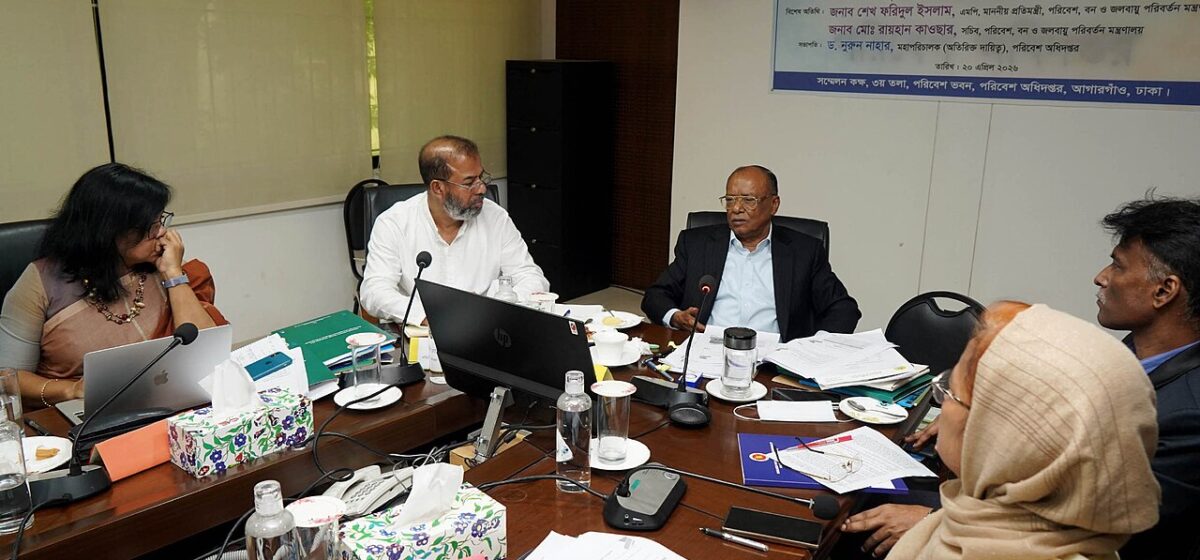
Farmers’ Voices Key to Bangladesh’s Climate Future
Bangladesh recently hosted a crucial national meeting in Dhaka. It focused on how small farmers can better adapt to climate change. This event, known as the National Policy Dialogue, explored solutions that local communities can lead themselves. Farmers are very vulnerable to climate risks. Bangladesh is working to protect them.
Many important people attended the dialogue this week. State Minister Shaikh Faridul Islam was the chief guest. He is from the Ministry of Environment, Forests and Climate Change. Tobias Biermann from the European Union also attended as a special guest. Nurun Nahar, an Additional Secretary from the same ministry, also spoke.
Leaders from various development partners, UN agencies, and NGOs joined the discussion. Researchers, civil society groups, and farmer organizations also took part. Fahmida Khatun from the Centre for Policy Dialogue chaired the session.
Bangladesh places great importance on adapting to climate change. This is a central part of the nation’s development plans. The National Adaptation Plan (NAP) sets out a long-term framework. It aims to build climate resilience for all sectors until 2050. This includes agriculture, food security, and livelihoods.
Locally Led Adaptation (LLA) is key to these efforts. It connects national policy with local government actions. It also links with community-level practices. LLA gives affected communities a central role. They help decide how to deal with climate risks. They identify solutions and carry out adaptation work.
The dialogue shared findings from a study. Traidcraft Exchange Bangladesh and the Centre for Policy Dialogue conducted it. This study looked at successful climate adaptation measures. It showed that community ownership is vital. Farmers need proper funding and technical help. Good coordination with local government is also important.
Traidcraft Exchange Bangladesh also manages the SWABOL project. This project is funded by the European Union. It works with around 50,000 marginalized farmers. The project supports farmer groups in 13 districts. It helps them take part in local development.
The dialogue aimed to confirm good adaptation practices. It also highlighted the challenges small farmers face. Participants discussed ways to strengthen local institutions. They explored how to involve farmers more in planning. The meeting also looked at using local knowledge in climate policies.
Everyone agreed that small farmers are vital partners. They help Bangladesh build stronger climate resilience. The dialogue found practical ways to turn national promises into local action.


